It’s here
100 years to the day at 00:01 on 18th April 2026, the National Archives has gifted genealogists and historians with the long-awaited public release of the Irish Free State’s 1926 census. The link to search is here. It’s free to access and you don’t need to register an account.
What’s on it?
This is a snapshot of everyone in the 26 counties on 18th April. You will find people in family groups, with their relationship to the head of the household documented. You will also find people in institutions like boarding schools, prisons, hospitals and county homes. Information is also provided about the building. My favourite inclusion is the much better detail on birthplace, which now gives a townland/town as well as a county. This is not me of course but how brilliant to find my own name in the mix.
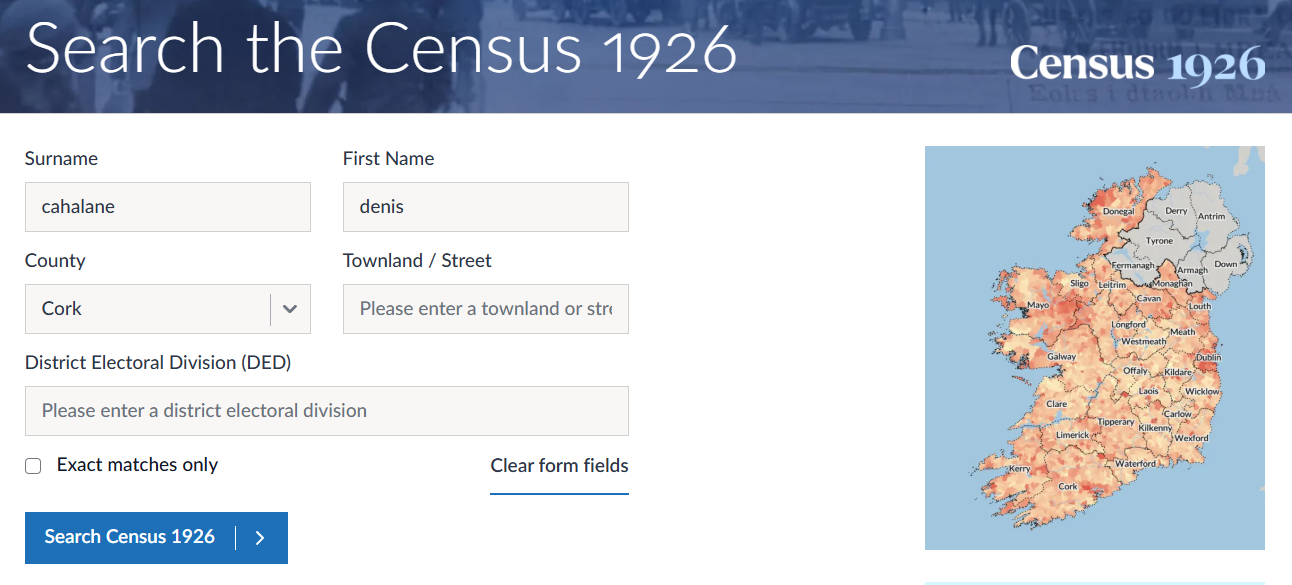
How to search
You can search by name, county, townland and DED (district electoral division) at present. Future phases will include the ability to do free-text searches and by occupation and birthplace. You can make use of an asterisk as a wildcard to replace letters. So searching an asterisk * on either side of mahon will find variants of Mahon and Mahony with and without the O and with or with an e (O’Mahony, Mahoney, Ó). Fadas work in the search too.
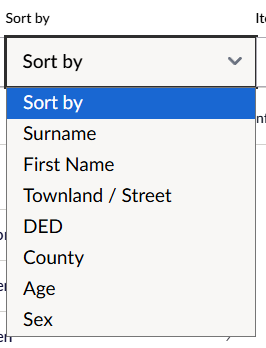
Results come as a table with 30 entries by default, but you can change to 50 or 100 and change what the results are sorted by.
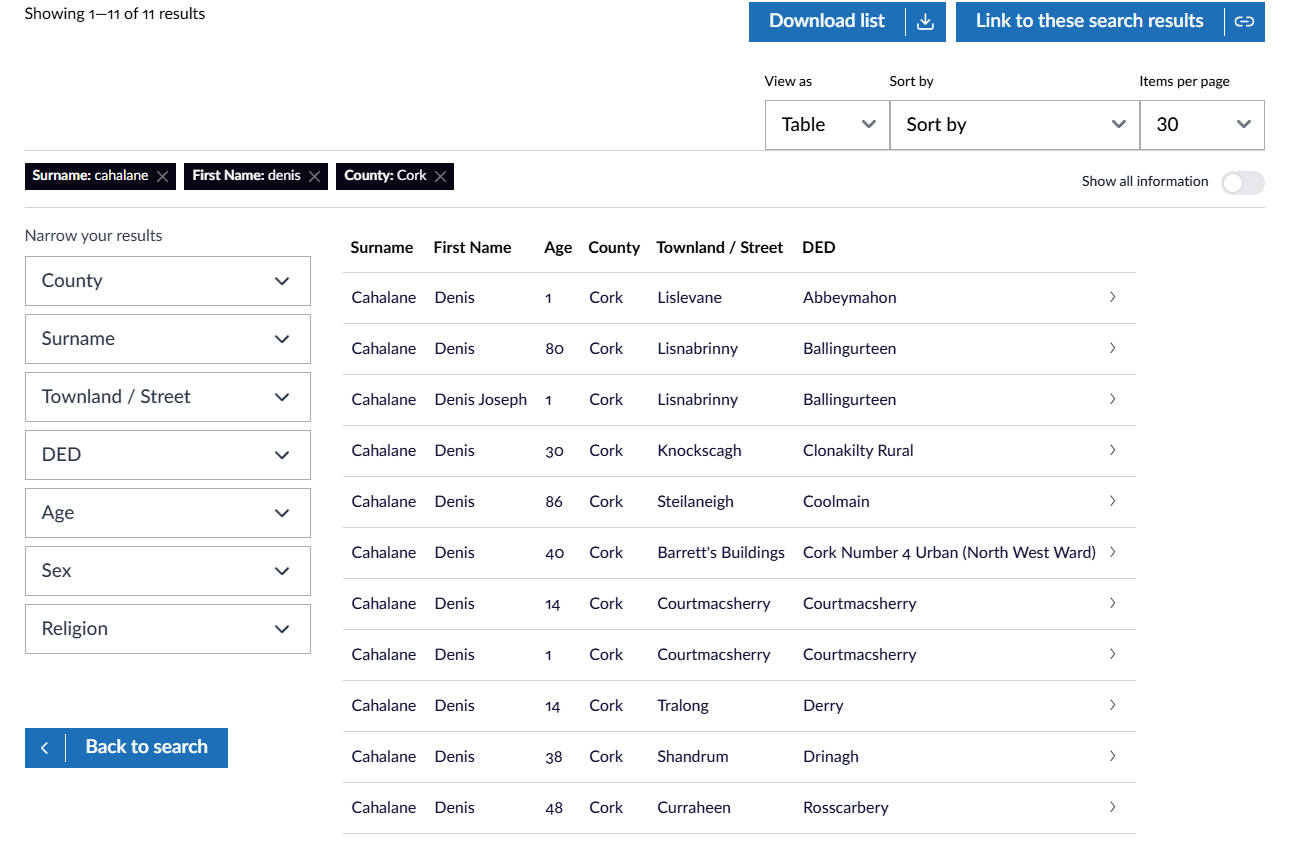
You can also use also use the filters on the side panel to narrow down results to an age group or by townland, religion, sex, etc.
Let’s look at an example of the person page now.
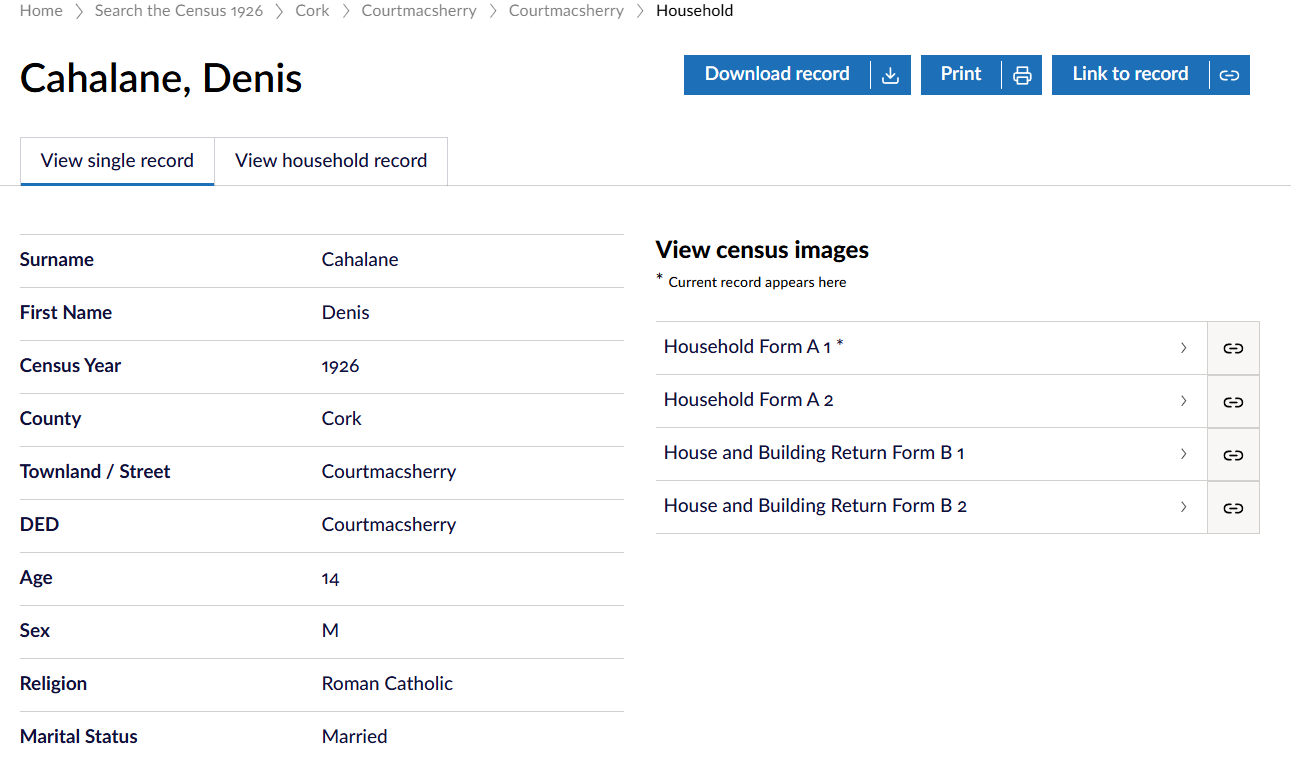
The view defaults to an individual but you toggle to “view household record” to see the family group. We get a small summary of the person’s details. Can you spot the likely transcription error? Click on Household form A1 to see the digital image.
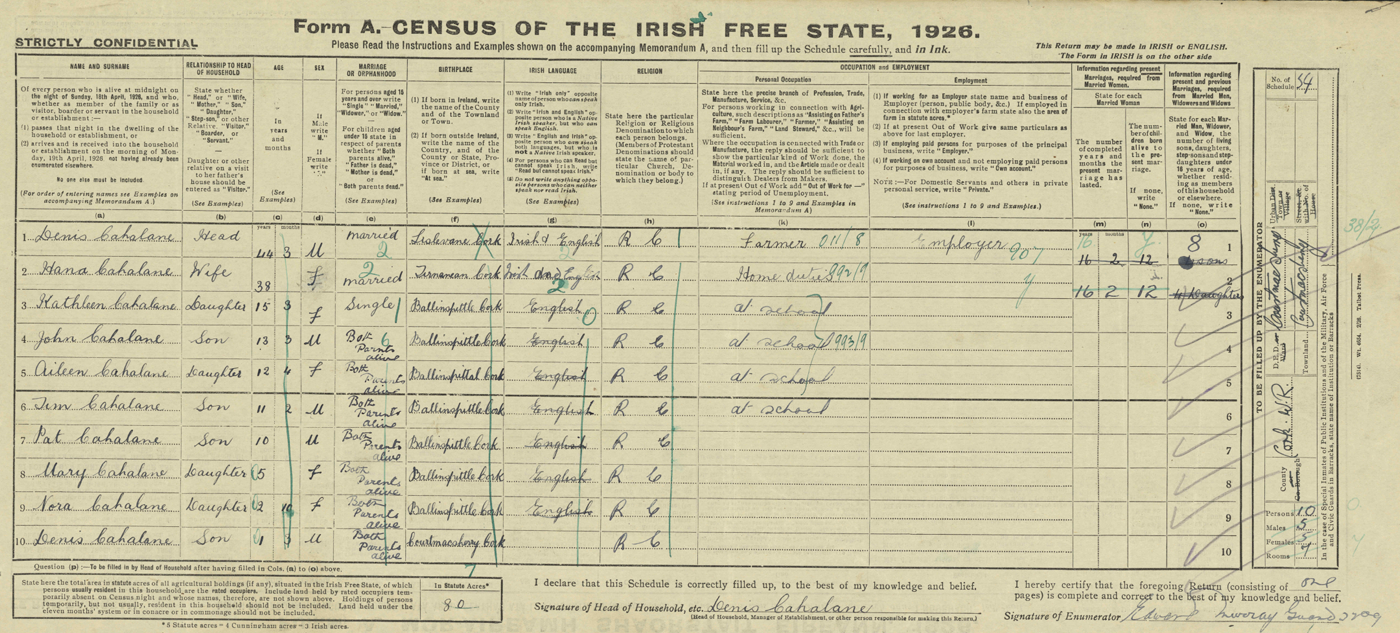
Yes, Denis Cahalane is 44 not 14. It’s a nice clear hand so the machine reading hasn’t picked this up right. Most of the transcription errors I’ve noticed so far (and there aren’t many) pertain to the age column and are often the fault of the green over-writing, which is statiticians notes about classifications within each category. There’s no error reporting mechanism at the moment. The FAQ notes
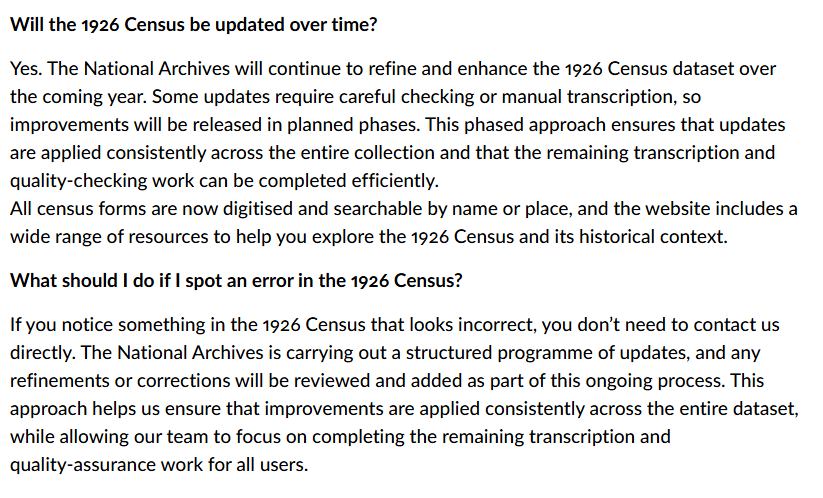
RTÉ is reporting that the Dept. of Culture, Communications and Sport (which has oversight of the National Archives) have stated people can submit errors to the main NAI email.
Bilingual
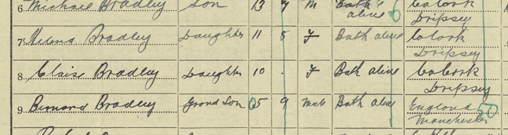
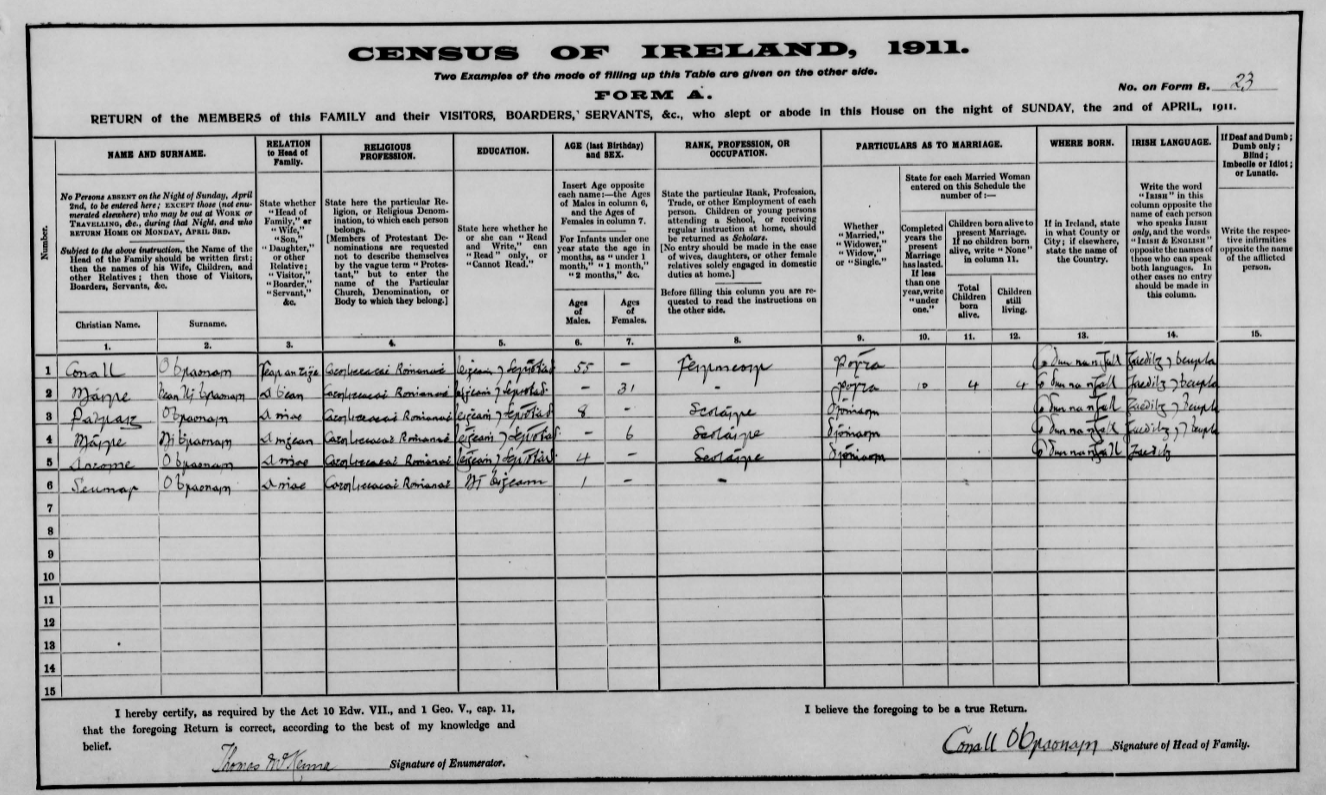
A lot of media has focused on this being the first census where people could complete the form in Irish. This isn’t quite the case. There’s lots of entries in Irish on the previous 1911 census and some from 1901 too. Here’s an example from Meenmore East, Co. Donegal.
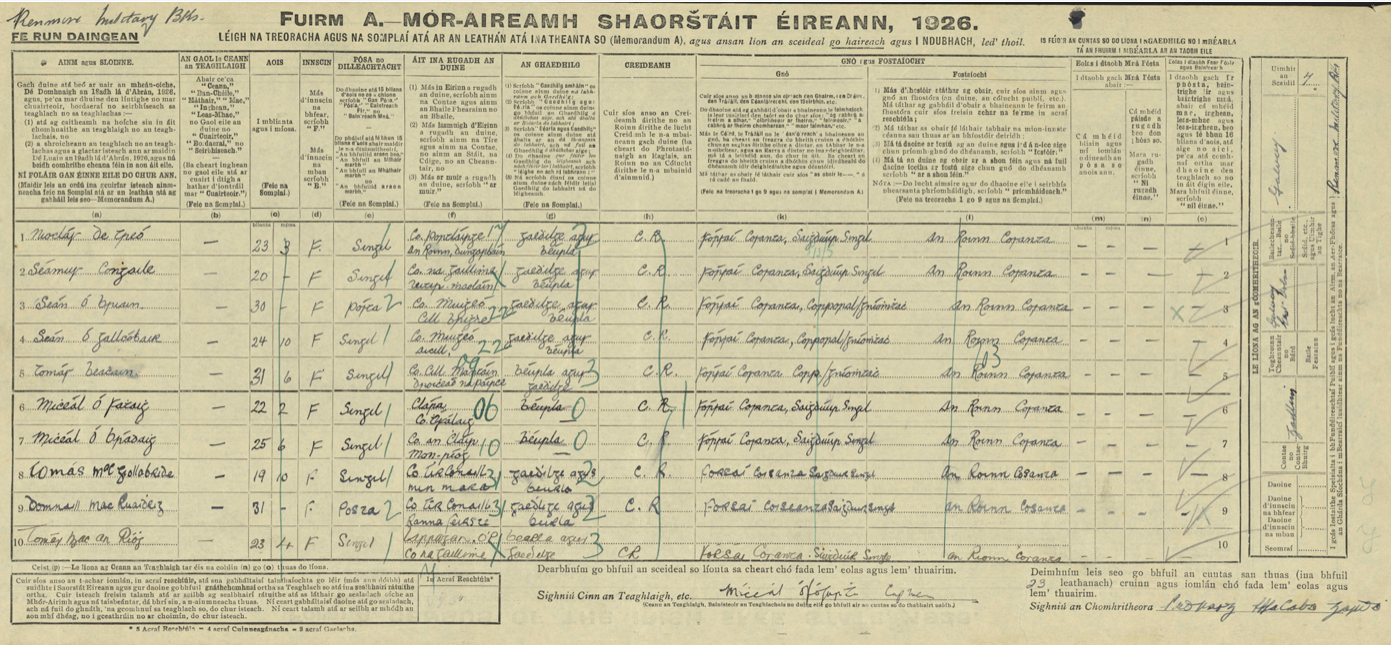
But what was different this time was the form was double-sided and the instructions were in Irish on one side and English on the other. The below example is from Renmore in Galway.
Maps!
I was really hoping the National Archives would learn from their past websites and include a map this time and I am not disappointed at all! It’s difficult to demonstrate this with screenshots but the map allows you to zoom into a location. They have a full page for explaining how the map works.
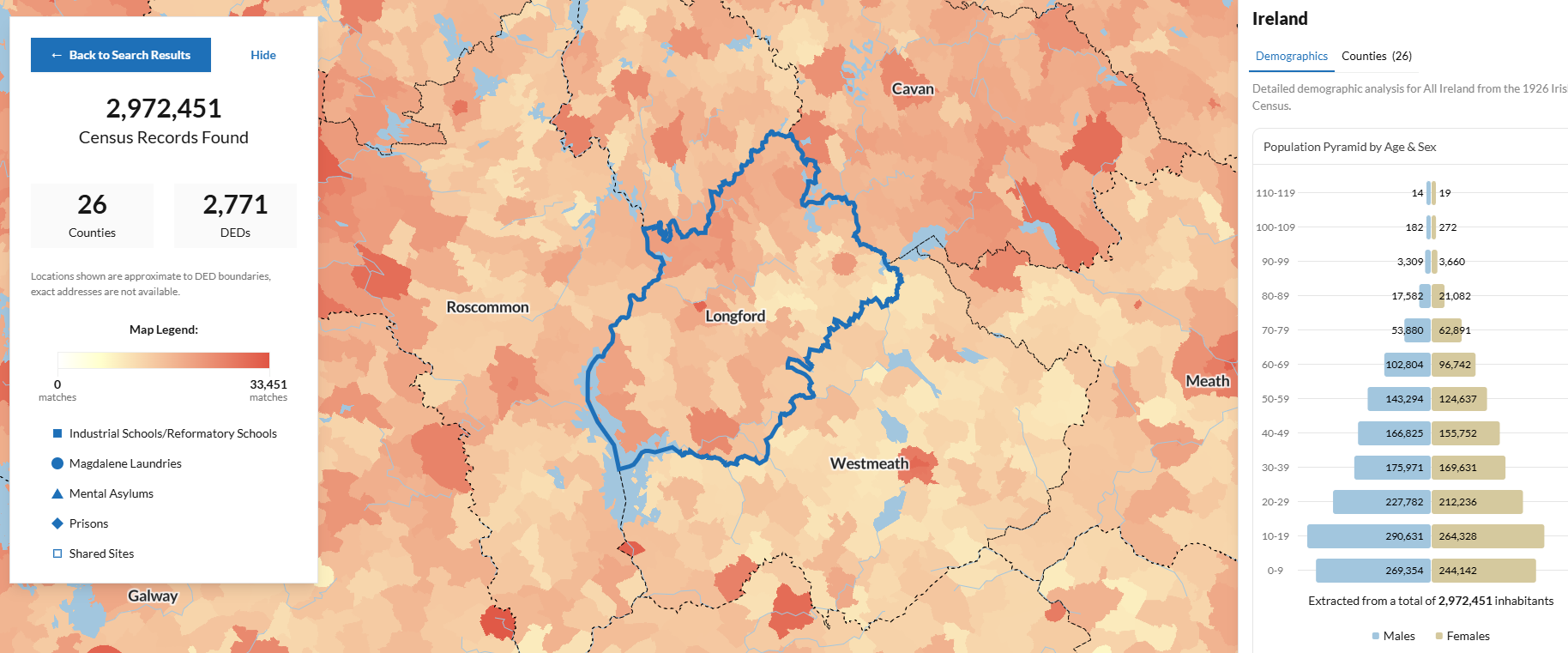
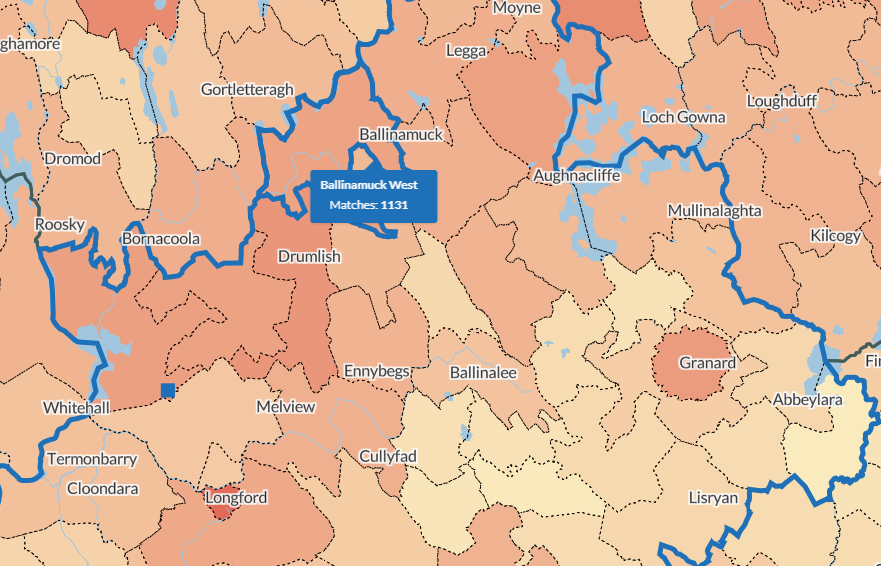
Once you get to a certain resolution, the map becomes shows first the DEDs.
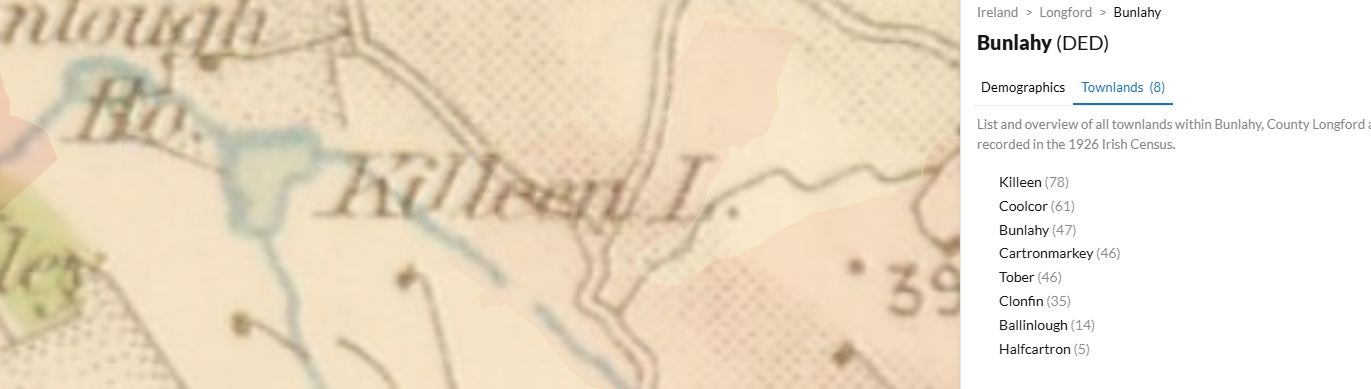
Zoom in even further and it becomes the 1924 Ordnance Survey map, which is cool. On the side, you can choose between demographics and townlands. These then link to the full return for that townland.
There’s so much here to explore and learn. I’m deliberately not being negative in this piece. Of course, there are things we’d like or errors we’re spotting, but let’s take the time to celebrate the release before we completely pick it apart.
Happy searching, everyone. I want to hear about your finds! Let me know of issues too and maybe I can help you work around them.
If you want to learn how to cite the census, go to this blog.
Smashing round-up Claire!
Thanks, Mark!
Fantastic overview of the 1926 Census- Many thanks. I have an issue in that I know my father and his family were living at 6 Dufferin Avenue (DED Merchants Quay) from 1911 to 1947 but cannot find them at all in the 1926 Census. When I search by DED and Dufferin Ave only 6 households appear on the list. In 1901 and 1911 there were at least 30/40 households appearing. Is this area part of the “missing” 3,000 mentioned by National Archives? Is there another way in which I can see a copy of the 1926 Census form for this?
Thanks, Irene!
I don’t know if that’s one of the missing streets, but it sounds like something is amiss.
I know the NAI are still doing checks but it might be worth dropping them an email on query@nationalarchives.ie about it.
That’s so helpful! Thank you. I have found my grandparents and researching.local downland but this is a great signposting post!
Thanks, Sheila!
It’s wonderful to have access to the 1926 census and some great work has been carried out. I didn’t see a facility to report errors. Does it exist? (Apart from the contact us link)
They haven’t enabled error reporting yet. It’s probably because in the initial phase, they’ll catch a lot of the errors themselves when they do their testing, and don’t want to duplicate work.
What I’m doing is keeping a file of errors I find and I’ll check back on them periodically.
I’m looking too find out about my great great great grandmother bríd ní neachtàin from spiddal co Galway her mother was Mary Mc donagh,how many was in Mary,s family ,who was her mother,father where did they come from
Hi Niall,
You’ll need to research them further.
What dates did Bríd live? I’m assuming it could be quite some time ago if she’s your 3x great-grandmother.
Let me know and I’ll give you some pointers.
Im looking for too find out about my great grandfather John Stanton in Bootle in Liverpool,he died in 1918 aged 42 years old where in Ireland was his parents from what hospital in Liverpool was he born in
Have you found his parents on the 1921 census in Liverpool? That census had better detail on birthplaces in Ireland.
Also investigate their marriage record for their father’s names.
Given when he was born, it may not have been a hospital birth.
Is it possible to find a person inan industrial school in this census. I’m looking for my maternal grandmother who was in Loughrea Industrial school.
Yes, browse the map to Loughrea and look for the blue square which will bring you to the institutional return.
I’m finding it tough to search for the branches of my family who didn’t standardise the spellings of their surname. Whitethorn/Whitethorne/Whithorn etc and Haigney/Hagney/Heagney etc. The etcs are important because sometimes they are off the wall and I’d never find them with the functionality of the website as it is.
Love the townland information. It seems like a lot of my people were confused on the question re children in the final two columns – there are a good few errors on entry there, often ammended later. And I miss the information re disability, that was such a rich resource. Delighted to finally get a look at it though!
Try with wildcards like H*gn*y to find funny variants.
I agree the question about kids is confusing. Just because they’re over 16 doesn’t mean you’d stop thinking of them as your child!
Got some Haigneys boarding at the Shannon hydroelectric scheme! Love the work information!
Brilliant!
Error reporting is the last section under FAQ
Hi John,
Great to hear from you!
I know it does give a contact address but it’s just the general contact address.
They seem to want to discourage error reporting at this stage.
C.
Hi Claire,
Thanks for the great summary, especially the maps as I didn’t know that was going to be a feature.
One quick question – I have copied the URL for the census image PDF into my source citations for the 1901 and 1911 censuses, but you can’t seem to do this with the 1926 image URLs. If you cut and paste them into another tab to test them you get a horrible error message. Do you know any more about how the NAI have chosen to implement this?
Hi Ruth,
Yes, the pdf urls have tokens so they time-out.
My suspicion, backed by no specific knowledge, is that in due course they will move the search facility into one page, where you select 1901/1911/1926 from a dropdown list.
I always save the transcription url into trees/citations.
C.